LONDON PIGMENT
Purple Lac Lake Pigment
Couldn't load pickup availability
Purple Lac Lake Pigment
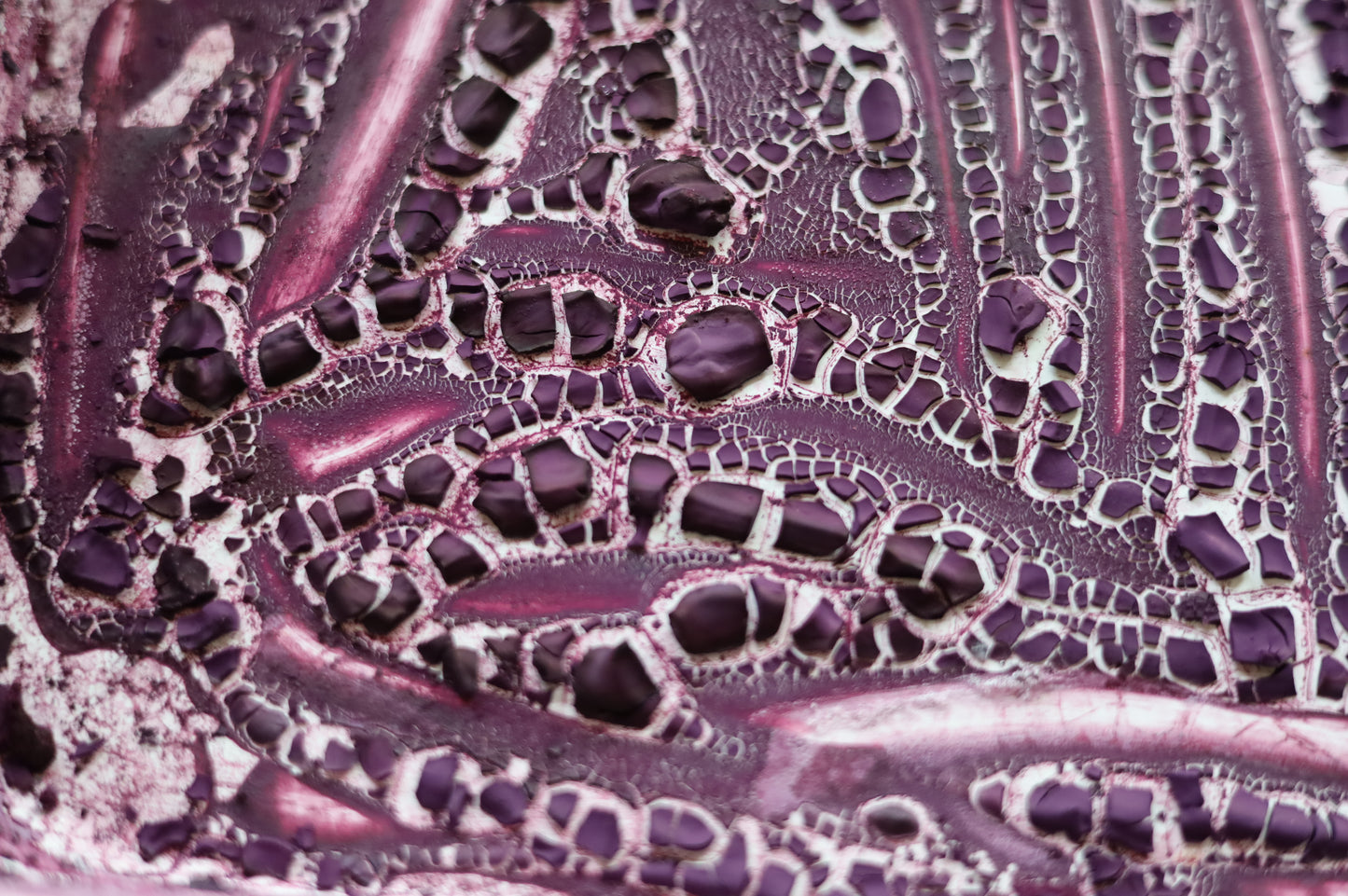
Delve into rich, sumptuous tones of velvety purple-red with this exceptionally deep lac lake pigment. Produced in limited batches, it is crafted to a recipe that traces its way back to the medieval period, carefully followed to ensure both permanence and stability. Each vial of pigment will produce approximately two half pans of watercolour paint.
About Lac Dye
Lac dye is a natural organic colourant derived from sticklac, the resinous encrustation formed on tree branches by insects. This sticklac is the secretion of insects belonging to the Kerriidae family, most commonly from the genera Kerriaand Paratachardina. These insects are indigenous to regions of India, Thailand, and Cambodia, where lac has been harvested and processed for centuries. The primary dyes responsible for this pigment belong to the anthraquinone group of colourants. These include several laccaic acids, with Laccaic Acid A and B being the most prominent. Present as water-soluble dyes, they give the pigment its distinctive depth and vibrancy.
About the Dye Extract
The sample of lac extract used for this pigment was provided by my pigment mentor, Keith Edwards. It is sourced from D. Manoharlal (Shellac) Pvt. Ltd., based in Calcutta, a highly respected manufacturer with over half a century of experience producing and supplying high-quality shellac both within India and internationally.
History of Lac Dye Use
Lac has been used as a dye since the Vedic period (1500–500 BCE) in India. By the 11th century, lac lake pigments were employed in manuscript illumination, with evidence also pointing to their use in a 12th-century Orthodox icon from Cyprus. It was not until the 14th century, however, that lac lake pigments became widely adopted in European easel painting, where they remained popular through to the 17th century.
Historical Reproductions
Lac lake pigments can range from red through purple to pink, depending on the extraction and preparation methods used. With documented use from the medieval period and widespread adoption during the late medieval and Italian Renaissance (14th–15th centuries), this pigment is well suited to faithful recreations of artworks from these periods.
This pigment is produced by precipitating the fermented dye onto a potash alum base using an alkali (sodium carbonate), using laboratory grade reagents, following historically grounded methods.
Permanence of Lac Lake Pigments
Lake pigments are derived from dyes, so they are not fully lightfast and will gradually fade over time. While they provide bright, vivid colour initially, exposure to direct sunlight and environmental factors (like being subjected to extreme of pH) will reduce their intensity. For best results, use them in applications where long-term permanence is not critical or where fading is acceptable. For better longevity apply several layers of the colour, keep out of direct sunlight and display under ultraviolet light filtering museum glass.
Product Details
5 ml glass vial sealed with carbon black wax.
Dimensions: 7.5 cm × 0.9 cm
Each vial comes in a small branded London Pigment box.
Further Reading
Historical formulations of lake pigments and dyes derived from lac: A study of compositional variability by Sanne V. J. Berbers, Diego Tamburini, Maarten R. van Bommel, Joanne Dyer in Dyes and Pigments, Volume 170, November 2019, 107579
Delivery Details
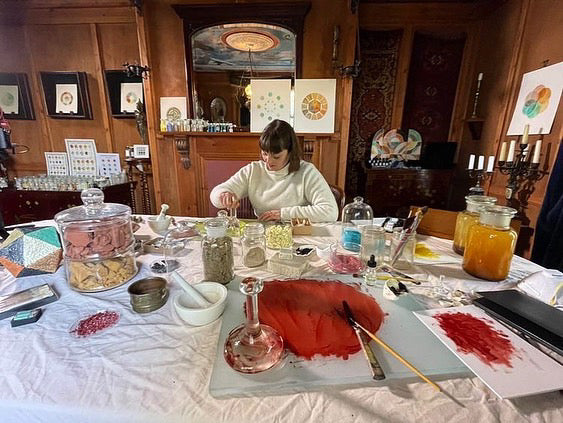
This product is usually dispatched within 4 days and sent via Tracked Royal Mail services. The long dispatch time is due to Lucy working concurrently on commissions & teaching alongside her pigment production. If you need your item quickly please get in touch with her.
Please email Lucy at info@londonpigment.com if you have any further questions!
Materials
Materials
Shipping & Returns
Shipping & Returns
Dimensions
Dimensions
Care Instructions
Care Instructions